Many Stories, One Purpose: Returning Wildlife to the Wild
Your generosity makes it possible for Sonoma County Wildlife Rescue to care for sick, injured, and orphaned wildlife, provide specialized rehabilitation, and return animals to the wild. Your support also helps us educate our community, prevent wildlife conflicts, and protect the future of the native wildlife we share our world with.
As we celebrate 45 years of wildlife care and 20 years at our Petaluma campus, we invite you to explore some of the stories that made 2026 an extraordinary year. Each one represents the dedication of our team, the strength of our partnerships, and the incredible impact of a community that cares.
REscue: An extraordinary year for eggs
A Rescue that began before the first breath
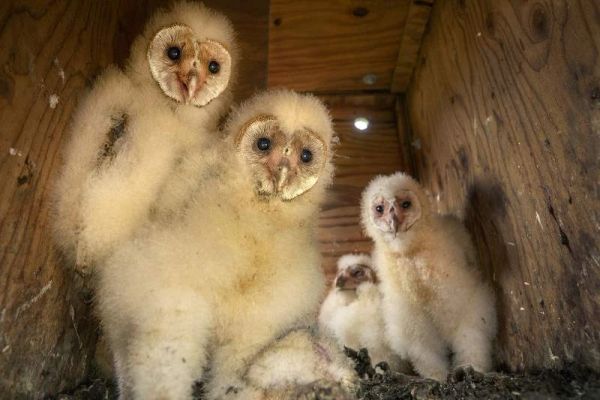
When barn owl eggs were discovered at an unsafe nesting site, their future was uncertain. Rather than leave them in a situation where they were unlikely to survive, the eggs were brought to Sonoma County Wildlife Rescue, where our team took on the delicate task of incubating them.
For the first time in our organization's history, we were incubating and hatching eggs. With careful monitoring and dedicated attention, the eggs hatched, and the tiny owlets began their next chapter in our wildlife hospital. There, they received the specialized care they needed during their earliest days of life.
But our goal was always bigger than helping them hatch. We wanted to give these young owls the opportunity to grow up with their own kind and develop naturally. Through our Barn Owl Maintenance Program’s spring monitoring services, we were able locate active nests and foster the owlets with wild barn owl mothers, giving them the chance to continue growing up in the wild. What began as an urgent rescue became an extraordinary example of what can happen when preparation, expertise, and opportunity come together.

A year of eggs we never expected
For the past several years, generous supporters have donated incubators to Sonoma County Wildlife Rescue that have vastly improved the quality of care for our most sensitive patients, neonate and young orphaned wildlife. Unable to thermoregulate on their own, these patients typically rely on their mother to balance the temperature and humidity levels until they are big enough for their bodies to handle this task on their own. These donations have improved the standard of care we were able to provide and have opened the door for possibility to incubate viable unhatched eggs.
The opportunity to incubate unhatched eggs is a rare one. Eggs are rarely viable by the time that they are discovered by humans, and it takes just the right set of circumstances to find eggs in time to be able to act. So, when we received our first clutch of barn owl eggs this summer, we all knew that we were embarking on a rare occasion that were all fortunate to witness. So, it’s fair to say that we did not expect to get the opportunity to care for unhatched eggs four more times in the coming months.
Indeed, in 2026, we found ourselves caring for several different species of eggs, including a western screech owl, a turkey vulture, and two sets of western pond turtles, in addition to the barn owls.

A Felled Nest of Western Screech Owls
When a tree containing a western screech owl nest was cut down, two chicks and an unhatched egg were brought to SCWR. Our team cared for the two young owls while continuing to incubate the remaining egg. Two days later, it hatched, bringing another owl, weighing only 7 grams, into our care.
From there, our raptor renest team was able to jump into action. Knowing that the parents were likely still in the area where the tree was felled, we were able to call upon our friends at Napa Wildlife Rescue to obtain a screech owl box. Our renesting team then installed it on a tree next to the original nesting tree and placed the hatchling owlets inside, in the hopes that the parents would return to care for their young. Wanting to be sure of this, we installed a trail camera facing the box and were absolutely elated when just moments after dusk, an adult screech owl was seen inspecting the box and then soon after delivering food.
This was a historic moment and opportunity for our organization to learn from the owls and observe adults caring for these owls from the moment of reunite to them fledging from the nesting box. See for yourself in the videos below the instinct, care and dedication that the adults poured into their young owlets.
See photos and videos of this story in the slideshow below.
A lone Turkey Vulture Egg
The next story is one of a turkey vulture egg that came to us under very different circumstances. During a rescue involving a female turkey vulture, an egg was discovered. It is suspected that the mother laid it in response to the stress of her situation. Unfortunately, her injuries were too severe for her to survive in the wild. But her egg, however, was carefully incubated and hatched a little over a month later, giving her offspring a chance at life in the wild.
Months after hatching, the young turkey vulture was grown and ready to return to the wild but to give it the best chance of success, we wanted to try to release it alongside a wild kettle (a group of turkey vultures). Thankfully, our renesting team knew of just the place!
A volunteer had a private property where a turkey vulture kettle was frequently seen visiting. We were able to slowly introduce the young bird to the kettle by keeping it in a nearby enclosure while encouraging the wild birds to visit the property with roadkill that had been collected by truly dedicated team members.
Our volunteer and trail camera kept a close eye on the kettle and the unfolding introduction. Soon after, the young vulture was released onsite. Thanks to the keen observation skills of our volunteers, the orphaned bird and the wild kettle were observed together for about 24 hours before all of the birds left the area.
See photos and videos of this story in the slideshow below.
Remarkable reptiles
Our egg journey did not end with avian patients. We also found ourselves caring for two separate batches of western pond turtle eggs. One batch was laid in a swimming pool after the mother became trapped inside. The other was laid by a turtle already receiving care at our wildlife hospital after being hit by a car.
While western pond turtles typically bury their eggs, both batches were laid in water and would not have survived without intervention. Thankfully, the eggs were collected in time, and after a couple of weeks of incubation, we were astounded to see that they were viable and developing!
Thanks to a quick-acting donor who purchased a reptile egg incubator from our Amazon Wishlist, we were able to update our set up for these eggs and successfully hatched a total of eleven western pond turtles months later!
See photos of this story in the slideshow below.
REhabilitate: A Journey Made Possible by Collaboration
Two young bobcats, a network of care
A young bobcat's first lessons about the world usually come from its mother. Through her, it learns the skills it will eventually need to survive independently in the wild.
For two young bobcats who came into our care this year, that journey took a different path.
The two bobcats were flown to Sonoma County Wildlife Rescue from Stanislaus Wildlife Care Center by Flying Tails, a valued partner in our wildlife rehabilitation work. Flying Tails helps connect wildlife in need with rehabilitation centers equipped to provide specialized care, making it possible for animals to travel safely to facilities that may be better suited to their needs. Their transportation network of volunteer pilots help to vastly reduce the time and stress of transportation for our patients, and creates collaborative opportunities between wildlife rehabilitators that might otherwise be difficult to coordinate. Thanks to the generosity of our supporters, we were able to help fund the bobcats' flights and make this important transfer possible.
At SCWR, the young bobcats received specialized care in our young predator enclosures, where appropriate diets, enrichment, and space to develop helped prepare them for their next steps. Together, with the right care and environment, these young cats began to thrive.
So, when we received word that Peninsula Humane had a bobcat of a similar age, we knew these two would be a good match to help their bobcat thrive as well. Working together with their team, we determined that since they had more room available in their predator enclosures, we would transfer our bobcats into their care where their journey continued.
Flying Tails once again helped make the next part of the journey possible, transporting the bobcats from SCWR to Peninsula Humane Society, where they could be paired with the other bobcats.
Better Together
This story is a beautiful example of wildlife rehabilitation as a collaborative effort. No single facility can provide every type of care or accommodate every animal in every circumstance. By sharing information, coordinating transportation, and working toward the same goal, rehabilitation centers can create better opportunities for the animals depending on them.
We are grateful to Flying Tails for the role they played in connecting these bobcats with the care and companionship they needed, and to our fellow rehabilitators for working together to support wildlife across California.
Every animal's journey is different. Sometimes, the most important thing we can do is provide specialized care ourselves. Other times, it is recognizing when another facility can offer something more and helping an animal get there.
In the end, the goal remains the same: giving every animal the best possible chance to develop the skills it needs for life in the wild.
A fun side note: As we write this update in early November, the collaboration continues as Peninsula Humane is currently visiting our facility (photographed to the right) to learn about our Apex Predator Enclosure so they they can begin their journey towards bear care!

Peninsula Humane Society visiting SCWR on 11/5/26 to view our Apex Predator Enclosure.

Release: A Safe Place to Return to the Wild
Helping Wildlife Find Their Way Home
Rehabilitation is not complete until an animal is ready to return to the wild. But finding the right place for that return is an important part of the process.
Through Sonoma County Wildlife Rescue's Release Site Program, we work with wildlife-friendly property owners throughout Sonoma, Mendocino, Lake and other neighboring counties, who welcome animals back into suitable natural habitat. These partners make it possible for rehabilitated wildlife to take the next step in their journey, returning to environments where they have the opportunity to resume their natural behaviors.
Each potential release site is carefully evaluated for appropriate habitat and the needs of the animals being released. The right location can make a meaningful difference, providing access to the natural resources and conditions each animal needs to begin it's life back in the wild.
In 2026, hundreds of animals have returned to the wild through the support of our release site partners. Every one of these releases represents the final step in a journey that may have begun with an urgent rescue, weeks of medical treatment, or months of specialized rehabilitation.
We are deeply grateful to the property owners who open their land to wildlife and help make these new beginnings possible.
Could your property become a release site?
We are always looking to connect with people who have suitable habitat and a willingness to help wildlife return to the wild. Properties with reliable, year-round access to water are especially valuable for our program.
If you have land that may provide appropriate habitat for rehabilitated wildlife, we would love to hear from you and our team can help determine whether your property may be a good fit.
CELEBRATING THE GRAND OPENING OF THE APEX PREDATOR ENCLOSURE
A NEW CHAPTER IN WILDLIFE CARE AND CONSERVATION
This year marked an extraordinary milestone in the history of Sonoma County Wildlife Rescue: the grand opening of our Apex Predator Enclosure, a specialized facility designed to support the rehabilitation of orphaned black bear cubs and mountain lions.
Creating this space took years of planning, construction, problem-solving, and collaboration. Made possible by the generosity of our supporters and the contributions of our community, the APE represents a significant expansion of our ability to care for these species.
Black bears and mountain lions are essential parts of healthy ecosystems, but orphaned young animals require specialized care before they are ready to survive in independently. Providing that care means creating secure environments where animals can develop physically, express natural behaviors, and build the skills they need for life in the wild, all while minimizing unnecessary human contact.
The APE gives our team dedicated spaces to meet these needs, along with facilities that support important aspects of animal care and husbandry.
Its opening was more than the completion of a construction project. It was the beginning of a new chapter in our ability to respond to the needs of these animals and contribute to wildlife rehabilitation in California.
We are incredibly grateful to the donors, families, businesses, volunteers, and community members who helped bring this vision to life. Your support has helped turn years of work and dedication into a resource that will serve wildlife for years to come.
Learn More About Our Apex Predator Enclosure
Visit our dedicated APE page to learn more about the project, the spaces created for wildlife, and the community effort behind this milestone.
BUILDING UNDERSTANDING. INSPIRING COEXISTENCE.
Rescuing and rehabilitating wildlife is at the heart of what we do, but our mission extends beyond the walls of our wildlife hospital.
Every day, people encounter wildlife in their homes, on their properties, and throughout their communities. These encounters can raise questions, create challenges, and sometimes lead to conflict. Through education, outreach, and practical support, we help people better understand the wild animals around them and discover humane ways to share our landscape.
From helping property owners prevent wildlife conflicts to training professionals and creating opportunities for people to connect with nature, our community support programs extend the impact of our mission far beyond individual rescues.
Our five community support programs each contribute in a different way to building understanding, encouraging coexistence, and protecting native wildlife.

A Wildlife Exclusion Services (AWES)
When wildlife finds its way into a home, attic, crawl space, or other structure, the situation can be stressful for both people and animals. Our Wildlife Exclusion Services program helps property owners resolve these conflicts through humane exclusion methods.
Discouraging harmful and illegal trapping, relocation, or poison, AWES focuses on helping wildlife leave safely and preventing future access. By addressing the conditions that allow animals to enter in the first place, we help people protect their homes while respecting the wildlife that shares their environment, often bringing their own benefits to humans with them.
Our work also helps people better understand why wildlife enters human spaces and how thoughtful prevention can reduce future conflicts.
Barn Owl Maintenance Program (BOMP)
Barn owls play an important role in local ecosystems, and our Barn Owl Maintenance Program helps provide nesting habitat through the installation, maintenance, and monitoring of barn owl boxes.
By working with property owners to maintain these nesting sites, we support barn owl conservation while offering a natural approach to rodent management. The program also creates opportunities to help people understand the ecological benefits of native predators and the importance of providing habitat for them.
The program's work became especially meaningful during baby season, when our barn owl boxes help make it possible to foster rescued owlets with wild barn owl mothers.

Predator Exclusion and Education Program (PEEP)
Living alongside wildlife sometimes means finding ways to protect livestock and domestic animals without harming the wild animals that share our surroundings.
Through PEEP, we help people explore practical exclusion strategies and humane coexistence techniques that reduce conflicts between native predators and domestic animals. Our educational approach helps property owners understand the behaviors of local wildlife and make informed decisions about protecting their animals.
By combining practical solutions with education, we work toward a future in which people can care for their animals while recognizing the important role native predators play in healthy ecosystems.

Wild Academy California
Wildlife rehabilitation and humane wildlife response require specialized knowledge, practical skills, and a commitment to continued learning.
Through Wild Academy, SCWR provides professional training and educational opportunities for wildlife rehabilitators, animal services personnel, and other professionals who encounter wildlife in their work. By sharing our experience and creating opportunities for hands-on learning and collaboration, we help strengthen the network of people working to protect wildlife.
These efforts extend our impact beyond the animals who come through our own doors, helping build knowledge, confidence, and capacity throughout the wider wildlife care community.
One With the Wild Wellness (OWTWW)
Our relationship with nature can shape how we understand and care for the world around us. One With the Wild Wellness creates opportunities for people to connect with nature through experiences that encourage appreciation, reflection, and a deeper connection to the natural environment.
By helping people experience the value of time spent outdoors, the program supports a broader understanding of why nature matters, both to individual well-being and to the health of the world we share.
When people develop a meaningful connection with the natural world, they have another reason to value and protect it.
Thank you for being a part of our story
As we reflect on 2026, we are reminded that the work of Sonoma County Wildlife Rescue has always been about more than any one animal, program, or accomplishment.
It is about the fragile egg given a chance to hatch. The young bobcats whose journey was made possible by collaboration. The rehabilitated animal welcomed back into suitable habitat. The property owner who chooses a humane solution. The professional who learns a new skill. And the community that comes together to create better opportunities for wildlife.
This year, we celebrated 45 years of caring for native wildlife, 20 years at our Petaluma campus, and the opening of a facility that will help us provide specialized care for generations of animals to come. We also witnessed remarkable moments of perseverance, teamwork, and new beginnings throughout our everyday work.
None of this happens alone.
Your generosity provides the resources, equipment, facilities, and opportunities that allow us to respond when wildlife needs help. Your support also makes it possible to share knowledge, encourage coexistence, and build a community that understands the value of protecting the natural world.
Thank you for believing in our mission and for being part of these stories. We are grateful to have you alongside us as we continue this work.